

Cryptocurrency investing has transformed from a niche interest into a mainstream financial opportunity. With Bitcoin reaching new all-time highs and institutional adoption accelerating, millions of new investors are asking the same question: how do I get started investing in crypto?
This guide walks you through everything you need to know about investing in cryptocurrency, from understanding the basics to executing your first purchase and building a diversified portfolio. Whether you have $100 or $10,000 to invest, the fundamental principles remain the same.

What Is Cryptocurrency Investing?
Cryptocurrency investing involves purchasing digital assets with the expectation that their value will increase over time. Unlike traditional investments like stocks or bonds, cryptocurrencies are decentralized digital currencies that operate on blockchain technology.
When you invest in crypto, you are essentially buying tokens that can serve various purposes. Bitcoin is often called "digital gold" for its scarcity and value preservation properties. Utility tokens like Ethereum power decentralized applications and smart contracts. Some cryptocurrencies are designed specifically for fast, low-cost payments, while governance tokens allow holders to vote on protocol decisions in DeFi projects. The growing NFT and gaming sector has also introduced tokens that power digital collectibles and blockchain-based games.
Why Invest in Cryptocurrency?
Before diving into the how-to, it is important to understand why investors are drawn to cryptocurrency and the risks involved.
Potential Benefits
| Benefit | Description |
|---|---|
| High Growth Potential | Crypto has outperformed most traditional assets over the past decade |
| Portfolio Diversification | Low correlation with stocks and bonds provides diversification benefits |
| 24/7 Market Access | Trade anytime, unlike traditional markets with limited hours |
| Accessibility | Start investing with as little as $1 on most platforms |
| Ownership Control | Self-custody options give you full control of your assets |
| Inflation Hedge | Fixed-supply assets like Bitcoin may protect against currency devaluation |
Key Risks to Consider
Cryptocurrency investing comes with significant risks that every investor must understand. Volatility is perhaps the most notable, with prices capable of swinging 10-20% or more in a single day. Regulatory uncertainty remains a concern as government regulations continue to evolve globally, potentially impacting how cryptocurrencies can be used or traded.
Security risks are also substantial. Exchanges can be hacked, and losing your private keys means losing your funds permanently with no recourse. Smaller cryptocurrencies are particularly susceptible to market manipulation through pump-and-dump schemes. The technical complexity of understanding wallets, networks, and transactions requires a learning curve. Unlike bank deposits, crypto investments have no insurance protection or guarantees.
Important: Only invest money you can afford to lose. Cryptocurrency should typically represent a small portion (5-15%) of a diversified investment portfolio, not your entire savings.
Step-by-Step Guide: How to Invest in Crypto
Follow these steps to start your cryptocurrency investment journey:
Step 1: Educate Yourself
Before investing any money, take time to understand the fundamentals. Learn how blockchain technology works and understand the differences between major cryptocurrencies. Research market cycles and historical price patterns to set realistic expectations. Familiarize yourself with common terminology through resources like our glossary, and follow reputable crypto news sources and analysts to stay informed about market developments.
Step 2: Determine Your Investment Amount
Decide how much you are willing to invest based on your financial situation. First, ensure you have an emergency fund covering 3-6 months of expenses before investing in volatile assets. Only use disposable income that you will not need for bills or essential expenses. Many successful investors started with just $50-100 to learn the process before committing larger amounts. Consider using a dollar-cost averaging approach, investing a fixed amount weekly or monthly rather than a lump sum, to reduce timing risk.
Step 3: Choose a Cryptocurrency Exchange
Select a reputable cryptocurrency exchange to buy and sell crypto. Here are the top options for beginners:
| Exchange | Best For | Fees | Coins Available |
|---|---|---|---|
| Coinbase | Beginners, US users | 0.5-1.5% | 200+ |
| Binance | Low fees, advanced traders | 0.1% | 350+ |
| Kraken | Security-focused users | 0.16-0.26% | 200+ |
| KuCoin | Altcoin variety | 0.1% | 700+ |
| Gemini | Regulated, institutional | 0.5-1.49% | 100+ |

Step 4: Create and Verify Your Account
Once you have chosen an exchange, complete the registration process. Start by signing up with your email address and creating a strong, unique password. Immediately enable two-factor authentication (2FA) using an authenticator app rather than SMS for better security. You will need to complete KYC verification by submitting identification documents as required by regulations. This process typically takes 1-3 business days. Finally, link your payment method by connecting your bank account, debit card, or other funding source.
Step 5: Fund Your Account
Add money to your exchange account using one of several methods. Bank transfers (ACH) are free or low-cost but take 1-5 business days to process. Wire transfers are faster for large amounts but carry higher fees of $10-30. Debit cards provide instant funding but come with higher fees of 2-4%. Some exchanges like Coinbase also accept PayPal. If you already own cryptocurrency, you can transfer crypto from another wallet or exchange.
Step 6: Place Your First Order
Now you are ready to buy cryptocurrency. Most exchanges offer several order types:
| Order Type | How It Works | Best For |
|---|---|---|
| Market Order | Buy immediately at current price | Quick purchases, beginners |
| Limit Order | Buy only when price reaches your target | Getting better prices, patient investors |
| Recurring Buy | Automatically buy on a schedule | Dollar-cost averaging strategy |
Step 7: Secure Your Investment
After purchasing crypto, consider moving it to a secure cryptocurrency wallet. Exchange wallets are convenient but you do not control the private keys. Software wallets like MetaMask or Trust Wallet offer more control over your assets. For larger holdings, hardware wallets like Ledger or Trezor provide maximum security by keeping your private keys offline.
Pro Tip: "Not your keys, not your coins" is a popular saying in crypto. For amounts over $1,000, consider using a hardware wallet to maintain full control of your assets.
Types of Cryptocurrency Investments
There are several ways to invest in the cryptocurrency market, each with different risk profiles and requirements.
1. Direct Cryptocurrency Purchase
The most straightforward approach is buying and holding actual cryptocurrencies. Bitcoin (BTC) is the original cryptocurrency and considered the safest long-term hold due to its established track record and network effects. Ethereum (ETH) is the leading smart contract platform powering DeFi and NFTs. Altcoins like Solana, Cardano, or Avalanche offer higher growth potential with increased risk. Stablecoins like USDC provide a way to earn yield without exposure to price volatility.
2. Crypto ETFs and Funds
For investors who prefer traditional investment vehicles, several options now exist. Bitcoin ETFs trade on stock exchanges and require no crypto wallet setup. Ethereum ETFs provide ETH exposure through standard brokerage accounts. Crypto index funds offer diversified exposure to multiple cryptocurrencies in a single investment. Grayscale trusts like GBTC and ETHE have been available for years as alternative crypto investment products.
3. DeFi Yield Strategies
Earn passive income on your crypto holdings through decentralized finance. Staking involves locking tokens to secure networks and earning rewards, typically yielding 3-15% APY depending on the asset. Lending on platforms like Aave or Compound allows you to earn interest on deposited crypto. Liquidity provision means providing trading liquidity to decentralized exchanges and earning a share of trading fees. Yield farming combines multiple DeFi protocols for potentially higher but riskier returns.
4. Crypto Stocks and Companies
Invest in publicly traded companies with significant crypto exposure. Coinbase (COIN) is the largest US cryptocurrency exchange. MicroStrategy (MSTR) holds substantial Bitcoin reserves on its balance sheet. Mining companies like Marathon Digital, Riot Platforms, and CleanSpark offer exposure to Bitcoin mining operations. Payment processors including PayPal, Block (Square), and Visa are increasingly integrating cryptocurrency services.
Building a Crypto Investment Portfolio
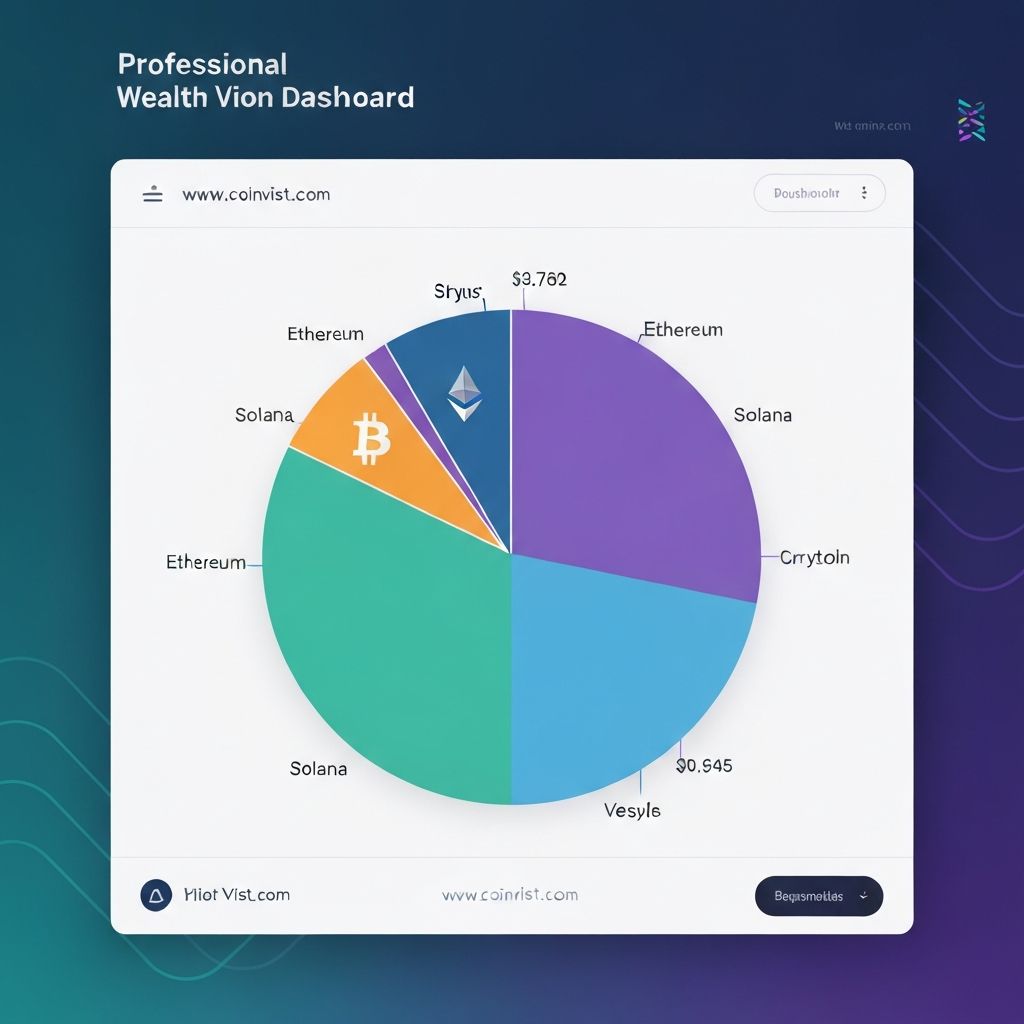
A well-structured portfolio balances risk and potential returns. Here are sample allocations based on risk tolerance:
Conservative Portfolio (Lower Risk)
| Asset | Allocation | Reasoning |
|---|---|---|
| Bitcoin (BTC) | 60-70% | Most established, lowest relative risk |
| Ethereum (ETH) | 20-30% | Second largest, strong fundamentals |
| Stablecoins | 10% | Cash position for buying dips |
Balanced Portfolio (Moderate Risk)
| Asset | Allocation | Reasoning |
|---|---|---|
| Bitcoin (BTC) | 40-50% | Foundation of the portfolio |
| Ethereum (ETH) | 25-30% | Smart contract exposure |
| Large-cap Altcoins | 15-20% | SOL, ADA, AVAX for growth potential |
| Stablecoins | 5-10% | Opportunity fund |
Aggressive Portfolio (Higher Risk)
| Asset | Allocation | Reasoning |
|---|---|---|
| Bitcoin (BTC) | 30% | Stability anchor |
| Ethereum (ETH) | 25% | DeFi and NFT ecosystem |
| Large-cap Altcoins | 25% | High-growth Layer 1s |
| Small-cap Altcoins | 15% | Speculative positions |
| DeFi/Staking | 5% | Yield generation |
Investment Strategies for Crypto
Dollar-Cost Averaging (DCA)
Dollar-cost averaging is the most recommended strategy for beginners. Instead of trying to time the market, you invest a fixed amount at regular intervals. For example, investing $100 every week regardless of price means you automatically buy more when prices are low and less when prices are high. This approach removes emotional decision-making from investing and has historically been effective for volatile assets like cryptocurrency.
Buy and Hold (HODL)
The HODL strategy (Hold On for Dear Life) involves buying crypto and holding it for years, ignoring short-term volatility. This approach works best for investors with long time horizons of 5+ years who have strong conviction in the long-term value of their chosen assets. It reduces trading fees and tax events while historically rewarding patient Bitcoin holders. The challenge is maintaining conviction during extended bear markets when prices may drop 70-80% from peaks.
Value Averaging
Value averaging is similar to DCA but adjusts purchase amounts based on portfolio performance. You set a target portfolio growth rate, for example $500 per month, and then invest more when your portfolio is below target and less (or even sell) when your portfolio exceeds target. This more active approach requires more management than simple DCA but can potentially improve returns by systematically buying more at lower prices.
Common Mistakes to Avoid
Learning from others' mistakes can help protect your investment. Investing more than you can afford to lose is the most dangerous error. Never use rent money, emergency funds, or borrowed money for crypto investments. FOMO buying (Fear Of Missing Out) leads many investors to chase pumps, typically resulting in buying at the top and panic selling at the bottom.
Ignoring security through weak passwords, skipping 2FA, or keeping large amounts on exchanges has cost investors billions of dollars. Not doing your own research and blindly following influencer tips without understanding the investment often leads to losses. Overtrading through frequent buying and selling racks up fees and often underperforms a simple buy-and-hold strategy.
Panic selling during market crashes locks in losses when volatility is actually normal in crypto markets. Putting all eggs in one basket by concentrating in a single cryptocurrency increases the risk of total loss. Finally, ignoring taxes can lead to serious legal and financial consequences, as crypto gains are taxable in most jurisdictions. Use our crypto tax calculator to estimate your obligations.
Understanding Crypto Market Cycles
Cryptocurrency markets tend to follow cyclical patterns that can help inform your investment timing and expectations.
Bull Markets
During bull markets, prices rise significantly over months or years, often accompanied by increased media attention and public interest. New all-time highs are reached, and optimism runs high. Notably, altcoins often outperform Bitcoin in the later stages of bull markets as investors seek higher returns and take on more risk.
Bear Markets
Bear markets see prices decline 50-80% from their peaks and can last 1-2 years. Many projects fail or lose most of their value during these periods. However, experienced investors often view bear markets as the best time to accumulate quality assets at significant discounts, preparing for the next cycle.
Bitcoin Halving Cycles
Historically, Bitcoin's price has followed patterns around its halving events, which occur approximately every four years. The halving reduces new Bitcoin supply by 50%, creating supply shock dynamics. Bull markets have historically followed within 12-18 months of each halving, though past performance does not guarantee future results. The next halving is expected in 2028.
Tax Considerations for Crypto Investors
Understanding tax obligations is essential for responsible crypto investing:
| Event | Tax Implication (US) |
|---|---|
| Buying crypto | No tax event |
| Selling crypto for profit | Capital gains tax (short or long-term) |
| Trading crypto for crypto | Taxable event (capital gains/losses) |
| Receiving crypto as income | Ordinary income tax |
| Staking/lending rewards | Ordinary income when received |
| Gifting crypto | Gift tax may apply over annual limits |
Tax Tip: Keep detailed records of all transactions including dates, amounts, and prices. Consider using crypto tax software to track your cost basis and generate reports for tax filing.
Tools and Resources for Crypto Investors
Successful crypto investing requires the right tools for research, tracking, and security.
For price tracking and research, use our Coinvist Price Tracker for real-time prices and market data. CoinGecko and CoinMarketCap provide comprehensive market data and rankings. TradingView offers advanced charting and technical analysis capabilities, while Messari delivers institutional-grade research and data.
For portfolio management, CoinTracker handles portfolio tracking and tax reporting across multiple exchanges. Koinly provides tax calculation services for multiple countries. DeBank specializes in DeFi portfolio tracking, and our Profit Calculator helps you calculate gains and losses.
For security, hardware wallets from Ledger and Trezor provide the safest storage for significant holdings. Password managers like 1Password or Bitwarden help secure your credentials. Always use authenticator apps like Google Authenticator or Authy for two-factor authentication rather than SMS-based verification.
Conclusion
Investing in cryptocurrency offers exciting opportunities but requires careful preparation and ongoing education. Start by understanding the fundamentals, choose reputable platforms, implement strong security practices, and develop a clear investment strategy aligned with your goals and risk tolerance.
Remember that successful crypto investing is a marathon, not a sprint. Focus on building a diversified portfolio, use dollar-cost averaging to reduce timing risk, and maintain a long-term perspective through market volatility. Most importantly, never invest more than you can afford to lose, and continue learning as this rapidly evolving space continues to develop.
Ready to start? Explore our complete coin listings, compare cryptocurrency exchanges, or learn more about crypto wallets to secure your investments.
