

Milky Way (MILK) has emerged as a notable player in the liquid staking sector, offering innovative solutions for Celestia ecosystem participants seeking to maximize their staking yields. As the decentralized finance (DeFi) landscape continues to mature, understanding price prediction methodologies for emerging protocols becomes essential for strategic investment decisions. This analysis provides detailed forecasts for Milky Way token across multiple timeframes.
The liquid staking derivatives (LSD) market has experienced tremendous growth following the success of protocols like Lido on Ethereum. Milky Way positions itself as the leading liquid staking solution for the Celestia modular blockchain ecosystem, allowing users to stake their TIA tokens while maintaining liquidity through milkTIA receipts. Can MILK token capture significant value as the protocol grows? Let us examine the factors that will shape its price trajectory.

Milky Way Price Prediction Overview
Before exploring our detailed analysis, here is a summary of our Milky Way (MILK) price predictions based on protocol fundamentals, market positioning, and growth projections:
| Year | Minimum Price | Average Price | Maximum Price |
|---|---|---|---|
| 2026 | $0.85 | $1.45 | $2.20 |
| 2027 | $1.20 | $2.35 | $3.80 |
| 2028 | $1.85 | $3.50 | $5.75 |
| 2029 | $2.50 | $4.80 | $8.20 |
| 2030 | $3.25 | $6.50 | $12.00 |
Key Insight: Milky Way benefits from first-mover advantage in the Celestia liquid staking market. Our projections assume continued growth in the modular blockchain thesis and increasing adoption of data availability solutions. Protocol TVL growth will be the primary driver of MILK token value.
What is Milky Way (MILK)?
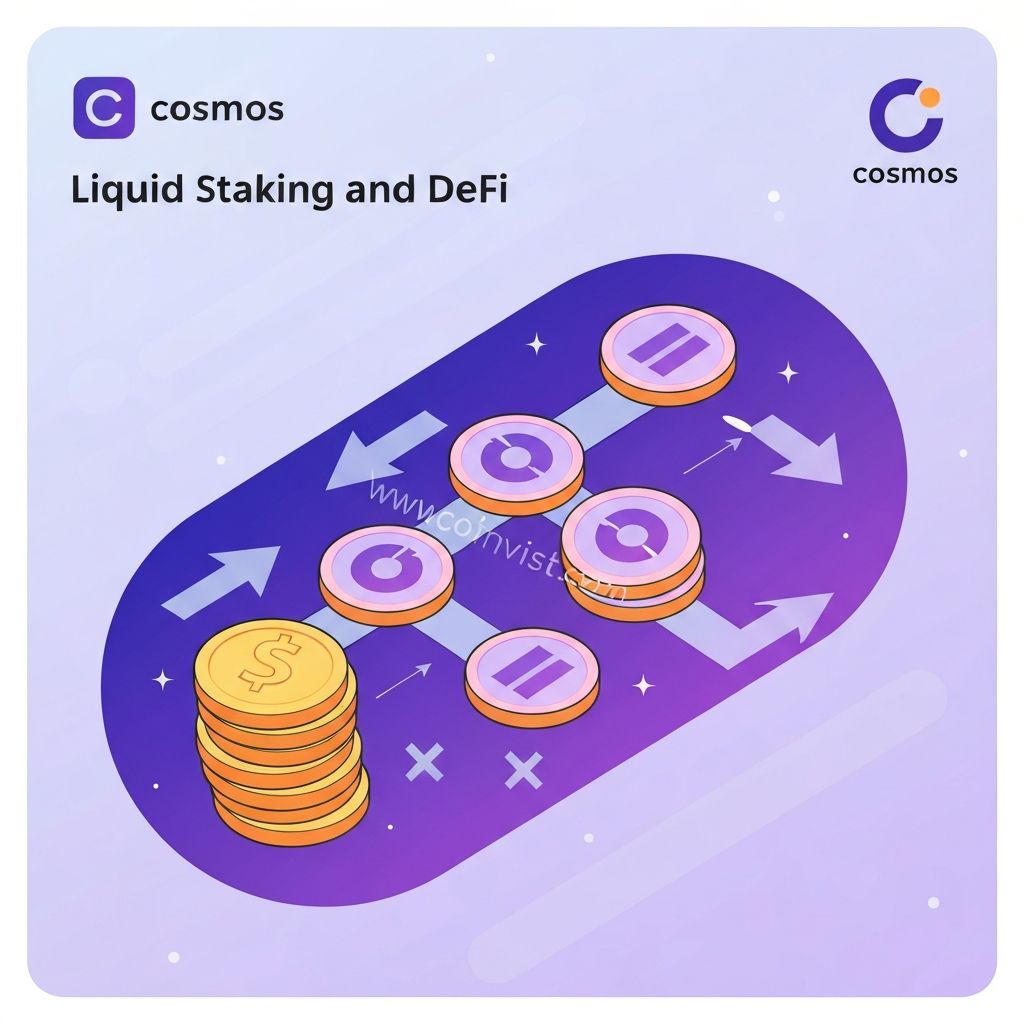
Milky Way is a liquid staking protocol built specifically for the Celestia ecosystem. The protocol allows TIA token holders to stake their assets while receiving milkTIA liquid staking tokens in return. These derivative tokens can be used across DeFi applications while the underlying TIA continues earning staking rewards.
Core Protocol Features
- Liquid Staking: Stake TIA and receive milkTIA tokens representing your staked position plus accrued rewards
- DeFi Composability: Use milkTIA as collateral in lending protocols, liquidity pools, and other DeFi applications
- Validator Delegation: Protocol optimizes validator selection for security and yield optimization
- MILK Governance Token: Holders vote on protocol parameters, fee structures, and treasury allocations
- Revenue Sharing: MILK stakers receive a portion of protocol fees generated from staking operations
Protocol Mechanics
When users deposit TIA into Milky Way, the protocol:
- Delegates the TIA to a diversified set of validators to minimize slashing risk
- Issues milkTIA tokens at a 1:1 ratio (initially) that appreciate in value as staking rewards accrue
- Collects a small fee (typically 5-10%) on staking rewards for protocol sustainability
- Distributes a portion of fees to MILK token stakers
Factors Influencing Milky Way Price Movements
Several key factors will determine MILK token price performance. Understanding these drivers helps create more accurate predictions and informed investment decisions.
1. Celestia Ecosystem Growth
As a protocol built on Celestia, Milky Way price is intrinsically tied to the success of the modular blockchain thesis. Key metrics to watch include:
- TIA token price and market capitalization
- Number of rollups deploying on Celestia for data availability
- Total data posted to Celestia network
- Developer activity and ecosystem grants
2. Total Value Locked (TVL)
TVL is the most critical metric for liquid staking protocols. Higher TVL translates directly to increased protocol revenue and typically correlates with higher token valuations. Milky Way competes for TVL by offering:
- Competitive staking yields
- Deep liquidity for milkTIA tokens
- Integrations with major DeFi protocols
- Security through audited smart contracts
3. DeFi Integration Expansion
The utility of milkTIA tokens depends on where they can be used. Each new integration increases demand for liquid staking through Milky Way:
- Lending protocols accepting milkTIA as collateral
- DEX liquidity pools pairing milkTIA with major assets
- Yield aggregators incorporating milkTIA strategies
- Cross-chain bridges enabling milkTIA on other networks
4. Competitive Landscape
Liquid staking is a competitive sector. Milky Way must maintain market leadership against:
- Other Celestia-focused liquid staking protocols
- Native staking improvements that reduce liquid staking appeal
- Centralized exchange staking offerings
- Restaking protocols that may capture staking demand
5. Tokenomics and Supply Dynamics
MILK token economics significantly impact price. Key considerations include:
- Token Distribution: Allocation to team, investors, community, and treasury
- Vesting Schedules: When locked tokens become available for trading
- Staking Incentives: Rewards for MILK stakers reduce circulating supply
- Fee Revenue: Protocol revenue supporting token buybacks or burns
Step-by-Step Price Prediction Process
Our Milky Way price prediction methodology employs multiple analytical frameworks to generate reliable forecasts:
Step 1: Fundamental Analysis
Fundamental analysis for DeFi protocols focuses on metrics unique to the sector:
| Metric | Current Status | Importance |
|---|---|---|
| Total Value Locked | Growing | Critical |
| Protocol Revenue | Fee-based model | High |
| Market Share | Leading position | High |
| Smart Contract Security | Audited | Critical |
| Team Experience | Established | Medium |
Step 2: Technical Analysis
Technical analysis identifies price patterns and momentum:
- Support and Resistance: Historical price levels where buying or selling pressure emerged
- Moving Averages: 50-day and 200-day MAs indicate trend direction
- RSI (Relative Strength Index): Measures overbought or oversold conditions
- Volume Profile: Identifies price levels with significant trading activity
- Fibonacci Retracements: Projects potential reversal levels
Step 3: Comparative Analysis
We compare Milky Way to similar protocols to establish valuation benchmarks:
| Protocol | TVL | FDV/TVL Ratio | Ecosystem |
|---|---|---|---|
| Lido (LDO) | $25B+ | 0.08x | Ethereum |
| Rocket Pool (RPL) | $3B+ | 0.15x | Ethereum |
| Marinade (MNDE) | $1B+ | 0.10x | Solana |
| Milky Way (MILK) | Growing | TBD | Celestia |
Step 4: Scenario Modeling
We develop multiple scenarios based on different market conditions and protocol performance:
- Bull Case: Celestia achieves top-10 market cap, Milky Way captures 40%+ of staking market
- Base Case: Steady ecosystem growth, Milky Way maintains market leadership
- Bear Case: Modular blockchain thesis fails to gain traction, competition erodes market share
Types of Cryptocurrency Price Predictions
Different prediction approaches serve various investment strategies:
| Prediction Type | Methodology | Best For | Accuracy |
|---|---|---|---|
| Fundamental | Protocol metrics, team, product-market fit | Long-term investors | Moderate-High |
| Technical | Chart patterns, indicators, volume | Traders | Moderate |
| Quantitative | Statistical models, correlations | Algorithmic trading | Variable |
| Sentiment | Social media, news, community mood | Short-term timing | Low-Moderate |
| AI/Machine Learning | Pattern recognition, predictive models | Data-driven investors | Variable |
Milky Way Price Prediction 2026
Our 2026 forecast for Milky Way assumes continued development of the Celestia ecosystem and growing adoption of modular blockchain solutions:
Expected Developments
- Multiple rollups launching on Celestia, increasing TIA demand
- Expansion of milkTIA integrations across major DeFi protocols
- Introduction of additional liquid staking products
- Growing institutional interest in Celestia ecosystem
2026 Price Forecast: We project MILK to trade between $0.85 and $2.20, with an average price of approximately $1.45. This assumes Milky Way maintains its dominant position in Celestia liquid staking with TVL growth of 100-200%.
Milky Way Price Prediction 2027
By 2027, the modular blockchain narrative should be well-established, and Milky Way protocol maturity will be a key differentiator:
Key Growth Drivers
- Celestia potentially achieving top-20 cryptocurrency ranking
- Cross-chain milkTIA deployments on Ethereum, Arbitrum, and other networks
- Launch of additional staking derivatives and structured products
- Potential integration with institutional custody solutions
2027 Price Forecast: Our analysis projects a range of $1.20 to $3.80, with an average of $2.35. The widening price range reflects increasing uncertainty in longer-term projections.
Milky Way Price Prediction 2030
Looking toward 2030, Milky Way price will depend heavily on whether modular blockchains become a dominant infrastructure paradigm:
Bull Case Scenario: Celestia becomes essential infrastructure for blockchain scalability. Milky Way captures majority of staking market with significant revenue generation. Price could reach $12.00 or higher.
Base Case Scenario: Steady growth with maintained market position. Protocol generates consistent fees and maintains relevance. Price stabilizes around $6.50.
Bear Case Scenario: Alternative scaling solutions dominate, reducing demand for data availability layers. Competition fragments the market. Price falls to $3.25 or lower.
Benefits of Accurate Price Predictions
Understanding cryptocurrency price predictions provides several strategic advantages:
- Entry Point Optimization: Identify attractive accumulation zones based on projected support levels
- Position Sizing: Allocate capital proportionally based on risk-reward assessment
- Exit Strategy Planning: Set realistic profit targets aligned with price projections
- Portfolio Rebalancing: Adjust allocations based on relative value assessments
- Risk Awareness: Understand potential downside scenarios and plan accordingly
- Conviction Building: Thorough analysis supports holding through volatility
Risks and Challenges in Crypto Price Prediction
Predicting prices for DeFi tokens like Milky Way presents unique challenges:
Smart Contract Risk
DeFi protocols face the constant threat of smart contract vulnerabilities. A security exploit could result in loss of user funds and catastrophic price decline. Even audited contracts can contain undiscovered bugs.
Ecosystem Dependency
Milky Way success is tied to Celestia performance. If the underlying blockchain fails to achieve adoption, the liquid staking protocol loses its value proposition regardless of execution quality.
Regulatory Uncertainty
Staking services face potential regulatory scrutiny in multiple jurisdictions. Classification of staking rewards as securities or restrictions on liquid staking could significantly impact operations.
Competition and Innovation
The DeFi space evolves rapidly. New protocols with innovative mechanisms could capture market share. Native staking improvements might reduce demand for liquid staking solutions.
Market Correlation
During broad market downturns, DeFi tokens typically decline more than major cryptocurrencies like Bitcoin or Ethereum. Beta exposure amplifies both gains and losses.
Warning: DeFi tokens carry substantial risk including smart contract vulnerabilities, regulatory uncertainty, and high volatility. Only invest capital you can afford to lose entirely, and consider DeFi allocations as high-risk positions within a diversified portfolio.
How to Use Price Predictions Effectively
Maximize the value of price predictions with these best practices:
- Diversify Information Sources: Compare multiple analyst predictions to identify consensus views
- Understand Assumptions: Evaluate the underlying assumptions behind each forecast
- Monitor Key Metrics: Track TVL, protocol revenue, and market share as leading indicators
- Update Regularly: Revise investment thesis as new information emerges
- Manage Position Size: Never overweight based solely on bullish predictions
- Set Stop Losses: Define exit points before entering positions
Investment Considerations for Milky Way
Before investing in MILK tokens, evaluate these factors:
Strengths
- First-mover advantage in Celestia liquid staking
- Strong protocol fundamentals with real revenue
- Growing ecosystem with increasing utility for milkTIA
- Experienced team with DeFi background
Weaknesses
- Dependent on single ecosystem (Celestia)
- Smaller market compared to Ethereum liquid staking
- Potential competition from native staking improvements
- Token unlock schedules may create selling pressure
Where to Buy Milky Way (MILK)
MILK tokens can be acquired through:
- Decentralized Exchanges: Osmosis DEX within the Cosmos ecosystem
- Centralized Exchanges: Check for listings on major platforms
- Protocol Participation: Earn MILK through liquidity provision or staking incentives
Always verify contract addresses through official Milky Way channels before transacting. Store tokens in a secure cryptocurrency wallet such as Keplr for Cosmos-based assets or a hardware wallet for maximum security.
Conclusion
Milky Way (MILK) represents an investment thesis centered on the growth of modular blockchains and the continued demand for liquid staking solutions. Our price prediction analysis suggests meaningful upside potential if the Celestia ecosystem achieves widespread adoption, though investors must weigh this against considerable risks inherent to early-stage DeFi protocols.
The protocol benefits from strong fundamentals: real revenue generation, first-mover advantage, and expanding utility for its liquid staking tokens. However, success ultimately depends on factors outside the protocol control, including Celestia adoption and broader market conditions.
For investors with conviction in the modular blockchain thesis and appropriate risk tolerance, Milky Way offers exposure to a growing sector with potential for outsized returns. As with all cryptocurrency investments, position sizing should reflect the speculative nature of the asset class.
Explore our educational guides for more information on DeFi investing, and check our other price predictions for analysis of additional cryptocurrencies. Stay informed, conduct thorough research, and never invest more than you can afford to lose.
